homework help

How 24/7 Homework Help Can Transform Your Academic Journey

In today’s fast-paced academic environment, students often feel overwhelmed by endless deadlines, complex assignments, and demanding professors. That’s where 24/7 homework help comes into play. At 24Hours Homework Solvers, we provide round-the-clock academic assistance designed to help students achieve their goals effortlessly. Why 24/7 Homework Help Is a Game-Changer Unmatched Convenience Imagine this: It’s 11 […]
Read more

5 Reasons Why 24Hours Homework Solvers Is Every Student’s Best Friend

Are you struggling with tight deadlines, complex assignments, or endless research? Say goodbye to stress! Here’s why 24Hours Homework Solvers is the ultimate solution for students worldwide: 24/7 Availability: Our team of experts is ready to assist anytime, ensuring you never miss a deadline. Plagiarism-Free Content: We deliver original solutions to boost your academic credibility. […]
Read more
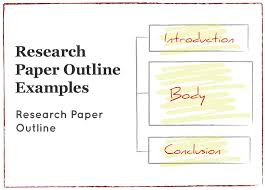
HIST 1301 Section Assignment 4: Causes of the Civil War Overview You have the option of completing either an essay or a digital story for this project (remember you must complete at least one of each type this semester so plan wisely). Because the digital story requires more work, students who complete that option and earn a “B” or better will get an additional 5 points extra credit on the assignment. Be warned that completing a digital story requires mastering new software and electronic equipment. Instructions/Prompt 1. Read the attached documents in light of the reading questions provided. 2. Write an analytical essay that addresses the following prompt: Evaluate the extent to which the Civil War was an unavoidable conflict in which Americans were no longer able to resolve their disputes through compromise. Consider the ideological (political), social, and economic roles that slavery played in secession (which was most vital). 3. Assignments need to have a minimum of four (4) direct quotations from the primary source reading documents, consisting of multiple viewpoints/speakers (i.e. not all should be from the same title/speaker/source) 4. All references must be cited using footnotes or a penalty will be assessed (see page 2) (remember, in “evaluate the extent” questions, you need to state not just the impact positive or negative, but also to what degree; i.e. “it was mostly positive due to…but there were some negative results as well due to…” or vice-versa) Papers need to be posted to the appropriate turnitin.com link found on Blackboard, while digital stories MUST to be uploaded to YouTube and a working link (ensure it is not private) to the video link must be uploaded to the same Turnitin.com link as the essays. Please note that YouTube may take down any video that uses copyrighted music or videos. Please consult this “how to” video on uploading to YouTube: https://www.youtube.com/watch?v=Hlxqk0iHp5w Option A: Traditional Paper Instructions Using the prompt, write a three to five page (approx. 1000-1500 words) typed and double spaced essay, with standard one inch margins, 12 point font, Times New Roman. Put your name on a separate title page, and do not include your name in a header or footer. Put page numbers on your document. Assignments that do not follow these straightforward instructions will be docked a letter grade. Late submissions will be penalized accordingly: For each day a project is late it will be reduced 1/3 of a letter grade (i.e. after 3 days, 10 points will be deducted). This includes holidays and weekends. Make a clear argument and use concrete examples to demonstrate your contentions. The very best papers offer meaningful analysis and a compelling narrative. For a useful guide to writing and properly formatting a history essay, please consult the “Tips for History Papers” website at the following address: http://www.bc.edu/schools/cas/history/resources/tips.html. Essayists who try to cram this difficult but rewarding process into a short space of time are setting themselves up for DISASTER. Start early, work hard, and feel free to contact me with questions. Quotations All quotes must be cited using footnotes, i.e. the following example: The provisional governor of the Louisiana Territory, Claiborne believed Frenchmen to be unworthy of U.S. citizenship. Writing to President Madison he stated, “The more I become acquainted with the inhabitants of this Province, the more I am convinced of their unfitness for a representative Government.’”1 (to create a footnote in Word or Google Docs, at the end of the sentence, click Insert, then click Footnote). The format is outlined below at the bottom of the page All other material must be rendered completely in your own words. See the following two examples of acceptable and unacceptable paraphrasing:  Passage rendered word for word from the text: “Work-sharing festivals such as house raisings, log rollings, and quiltings gave isolated farm folk the chance to break their daily routine, to socialize, and to work for a common good.”  Unacceptable paraphrase: Work-sharing opportunities including house construction, log gathering, and sewing gave detached farmers an opportunity to change their routine, to party, and to work for each other.  Acceptable paraphrase: Farmers merged their social lives with their work lives to gain relief from the monotony of an agrarian existence. Examples of entertainment included communal endeavors such as home construction and quilting. The major difference between the two paraphrasings is sentence structure and word choice. It is not sufficient to change a few words and retain the original sentence structure when paraphrasing. Writers must take the idea and put it in their own words, which means new sentence structure and significantly different word choices. One final point on quoting: the wise student will not quote from the textbook. Save your quotes for the most provocative concepts contained within the original documents! As a rule, the language in the textbook is not worthy of being quoted.  Since it is the documents you are analyzing to make your argument, you are better off spending time with them.  Use the text and the lectures to make sure you understand the larger historical context. Completion of the paper assignment requires consultation of no additional sources. You must not use Wikipedia or any other Internet source. Use only your assigned materials: the e-book, lecture notes, and the primary document readings available on Blackboard. 1 “Claiborne to Madison, January 10, 1804,” The Evolution of American Citizenship: The Louisiana Purchase, 1803-1812, 112. “Title of source,” speaker’s name, page (either of document or .pdf page number) Option B: Digital Story DIRECTIONS FOR THE DIGITAL STORY: Should you wish, you may construct a digital story between 7-10 minutes in length that includes multiple images and/or documents from the original materials assigned to you and from some very basic library and/or Internet research into related sources. Assignments completed using this method are also due the same day as the essay. The same late penalties apply. The digital story requires analytical thinking and explication of evidence, but the presentation format is different, oral and visual not written. Students should remember that visuals, sound, and tone have an important rhetorical effect if deployed well.  Students may use iMovie or Audacity or any other equivalent video-editing program; students may also narrate a PowerPoint using ScreenCastify or Kaltura (though the final video must still be uploaded to YouTube).  Students must narrate their digital stories and must include an argument and evidence to support the argument, the bulk of which should come from the primary documents in the assigned PDFs but approximately a quarter from original research.  The images need to be selected with great care and they need to relate to the narrative and analysis contained in the digital story.  Digital story telling is not sitting and reading a script while looking at the computer camera. Students may use music as long as it is in the public domain. For digital stories, narrating aloud a description of the actual source (i.e., according to a letter from Franklin Roosevelt on February 16, 1941) along with reading or paraphrasing or describing the portion of the source you are using is necessary. Instead of footnote citations, though, students will need to have a brief bibliography on the last slide or frame of their digital stories. In this bibliography list all the sources you consulted for this assignment, including those common to the course and those you found through your library research Students will need to engage in some rudimentary library research to find visual sources. Students may find images at one of several approved Internet sites where the images are available in the public domain: UH Digital History; Library of Congress Prints and Photographs; National Archives; Google Advanced Image Search (To use the usage rights filter option, select "advanced image search" on the main Google Images page. Once in the "advanced image search" page, you will find the usage rights options at the bottom of the page. In the usage rights menu you can select one of four options; "labeled for reuse," "labeled for commercial reuse," "labeled for reuse with modification," or "labeled for commercial reuse with modification."). Links to How-to Guides and Software Tutorials See this extremely useful webpage for information on getting started, storyboarding, the 7 elements of storytelling, using software, and other helpful suggestions as well as examples of digital storytelling: http://digitalstorytelling.coe.uh.edu/ GET STARTED ON YOUR DIGITAL STORY EARLY!!! While producing a digital story is fun and rewarding, please only take this option if you are willing to put in the extra work. Last minute jobs will be disasters and result in low grades. Start early, work hard, and feel free to contact me with questions. IT WILL BE IMPOSSIBLE TO COMPLETE A HIGH QUALITY DIGITAL STORY IF YOU WAIT UNTIL THE LAST MINUTE. Digital Story Assessment Your digital story will be evaluated according to the following criteria: 1. On a traditional A, B, C, D, F scale 2. Clarity of interpretation narration. 3. Quality and use of images, video, and audio. 4. Production values: pacing, transitions, and editing. GRADING RUBRIC (for both digital story and essay):  Uniformly excellent work—defined as including an original and insightful argument (thesis), substantial evidence derived from all assigned sources (the e-book, lecture notes, and primary document readings for the first three weeks)—but especially the primary document PDFs—to support that argument, and cleanly written prose—will receive an “A.” (Here substantial evidence means approximately 2-3 specific examples for each component of the question/body paragraph.)  Work that is above average—defined as including a convincing but incomplete argument and evidence written with minor errors—will receive a “B.” It is impossible to score B or A range without substantive incorporation of the primary document PDFs. This means quoting from and explaining multiple documents.  Work that is average—defined as including a weak or inadequate thesis, a summary of evidence without meaningful interpretation, minimal usage of evidence, and possibly some significant errors of grammar and/or organization—will receive a “C.” Furthermore, work with simple summaries of the primary document PDFs that do not engage the meaning of those documents will score C range.  Work that is below average—defined as including no attempt at a thesis, weak generalizations in lieu of specific evidence, and possibly significant grammatical and/or mechanical problems—will receive a “D.” Work that does not engage at all the primary document PDFs will score D range if it otherwise addresses the topic in a generalized fashion and/or heavily relies solely on lecture notes  Work that is failing—defined as including little or no understanding of the material and significant mechanical problems—will receive an “F.” This also includes work that does not make any mention of the primary document PDFs College Historical Essay Outline Writing Like a Historian Historical thinking/writing is always about why/how something happened and its impact/legacy. You need to read and analyze the “why” and “how.” I. Intro paragraph: a. Context – Provide background of the prompt (provide the who, what, where, when, why of events that led up to the prompt) b. Thesis argument (with at least 2-3 reasons/topics/themes/categories) II. 1 st body paragraph: Topic sentence (elaborate on first thesis point/reason) a. Provide a Specific Historical Example (S.H.E.) (direct quote, paraphrase, or concrete example) that supports your argument b. Explain S.H.E. (quotes are not self-sufficient, but need explanation and analysis) c. Repeat for 1-2 examples (a quality paragraph should have 2-3 examples) d. ANALYZE the evidence you described above and tie all back to thesis III. 2 nd body paragraph: Topic sentence (elaborate on second thesis point/reason) a. Provide a Specific Historical Example (S.H.E.) (direct quote, paraphrase, or concrete example) that supports your argument b. Explain S.H.E. (quotes are not self-sufficient, but need explanation and analysis) c. Repeat for 1-2 examples (a quality paragraph should have 2-3 examples) d. ANALYZE the evidence you described above and tie all back to thesis IV. 3 rd body paragraph (if needed): Topic sentence (elaborate on third thesis point/reason) a. Provide a Specific Historical Example (S.H.E.) (direct quote, paraphrase, or concrete example) that supports your argument b. Explain S.H.E. (quotes are not self-sufficient, but need explanation and analysis) c. Repeat for 1-2 examples (a quality paragraph should have 2-3 examples) d. ANALYZE the evidence you described above and tie all back to thesis V. Conclusion: a. Restate your argument using different words. b. Mention “the other side” of the argument (if you made a comparison, then contrast) and/or provide the legacy of the prompt/your argument Be very specific. If you just mention a source connection briefly and move on, you will NOT get credit

The Benefits of Professional Homework Help Services

The Benefits of Professional Homework Help Services Struggling with your homework? Professional homework help services offer a range of benefits that can enhance your academic performance and overall learning experience. 1. Improved Grades Expert assistance ensures your assignments meet high academic standards, which can lead to better grades. Professionals can provide insights and solutions that […]
Read more
assignment writing service

Top Strategies for Efficient Time Management in College and University

Top Strategies for Efficient Time Management in College and University Managing time effectively is crucial for college students juggling multiple responsibilities. Here are some top strategies to boost your productivity and reduce stress: 1. Prioritize Tasks: Identify urgent and important tasks using tools like the Eisenhower Matrix. Focus on high-priority assignments first. 2. Use a […]
Read more

How to Write an A-Grade Essay: Tips and Tricks from Experts

Learn how to write an A-grade essay with expert tips and tricks. Improve your writing skills and get better grades.   Introduction: Writing an A-grade essay requires planning, research, and writing skills. In this blog, we’ll share expert tips and tricks to help you improve your writing skills and achieve better grades. Tip 1: Understand […]
Read more

How to Write a Perfect Research Paper: A Step-by-Step Guide

Follow this step-by-step guide to write a perfect research paper. From choosing a topic to final edits, we’ve got you covered. Introduction: Writing a research paper can be challenging, but a structured approach makes it manageable. In this guide, we’ll walk you through the steps to write a perfect research paper, from choosing a topic […]
Read more
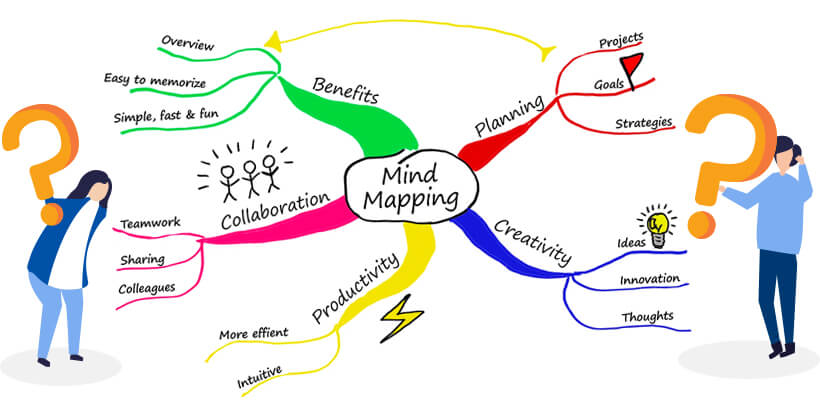
A mind map visually organizing a central concept into sub-topics

10 Study Hacks Every Student Should Know

Discover 10 study hacks that will help you learn faster, improve memory retention, and achieve better grades. Introduction: Studying efficiently can make a big difference in your academic success. In this blog, we’ll share 10 study hacks that will help you learn faster, improve memory retention, and achieve better grades. Hack 1: Use Mind Maps […]
Read more
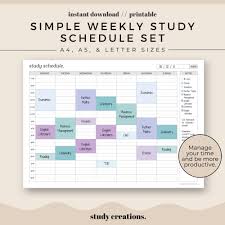
A well-organized study schedule to help students manage their time effectively.

Top 5 Time Management Tips for Students to Ace Their Exams

Boost productivity and ace your exams with these top 5 time management tips for students. Learn how to manage your study time effectively. Introduction: Time management is a crucial skill for students aiming to ace their exams. With assignments piling up and deadlines fast approaching, many students struggle to stay on top of their work. […]
Read more

INSTANT ANSWERS NOW

INSTANT ANSWERS NOW! Instant Academic Excellence: Unlocking A Grades with 24HoursHomeworkSolvers.com Welcome to the forefront of academic success! At 24HoursHomeworkSolvers.com, we’re proud to introduce a revolutionary solution that guarantees A grades in all subjects – instantly. Say goodbye to academic stress and hello to excellence with our extensive repository of solved assignments, discussions, and exams, […]
Read more

Mastering SOAP Notes: Your Ultimate Solution at Unbeatable Prices!

Mastering SOAP Notes: Your Ultimate Solution at Unbeatable Prices! In the dynamic world of healthcare, effective communication is paramount. Amidst the flurry of patient consultations and medical procedures, healthcare professionals rely on concise and organized documentation to ensure quality care. This is where SOAP (Subjective, Objective, Assessment, Plan) notes step in as a vital tool […]
Read more
Shopping Cart (0 items)